Report No. 7
Report No. 7: Learning to Wind a Korean Perm, Seoul, 16 August 2026
Report No. 7. In March I could not hold a perm rod properly. In August a whole part of the class was about hands: grip, paper, tension. What I learned, strand by strand.
Oksana Prisyazhnaya, founder and editor. 26 October 2026
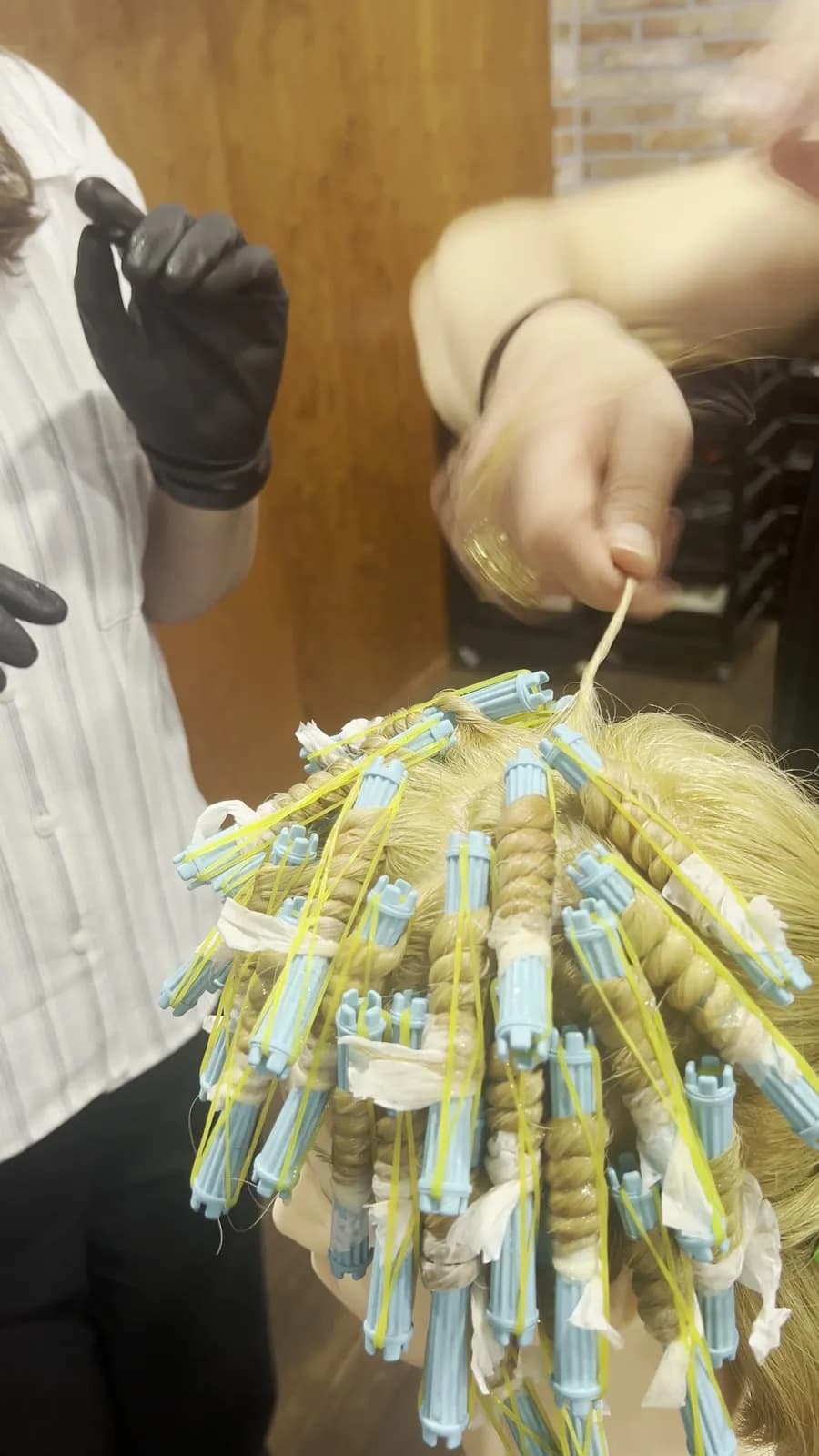
In short. After the March seminar in Seoul I was honest with myself: I could not yet hold a perm rod properly. In August, on the first day of my cold perm and root volume training at MASSTIGE HAIR Academy in Gangnam (Report No. 4), a large part of the class was about hands. Hong Jihoon named the winding types, showed why Korean stylists wind on a diagonal, and then corrected the grip, the end paper and the tension strand by strand. His last instruction was simple: do it a lot.
How it was
Winding types. He started by naming the basics so we could talk in one language: croquignole, the plain straight winding everything else starts from; vertical; forward, towards the face; reverse, away from the face; spiral; and twist, where the strand is twisted into a rope first. Then a correction that stayed with me: in Korea a strictly vertical winding is not done. The rod goes on a diagonal parting, which they call "diamond". On the live model he combined croquignole and vertical in one head.
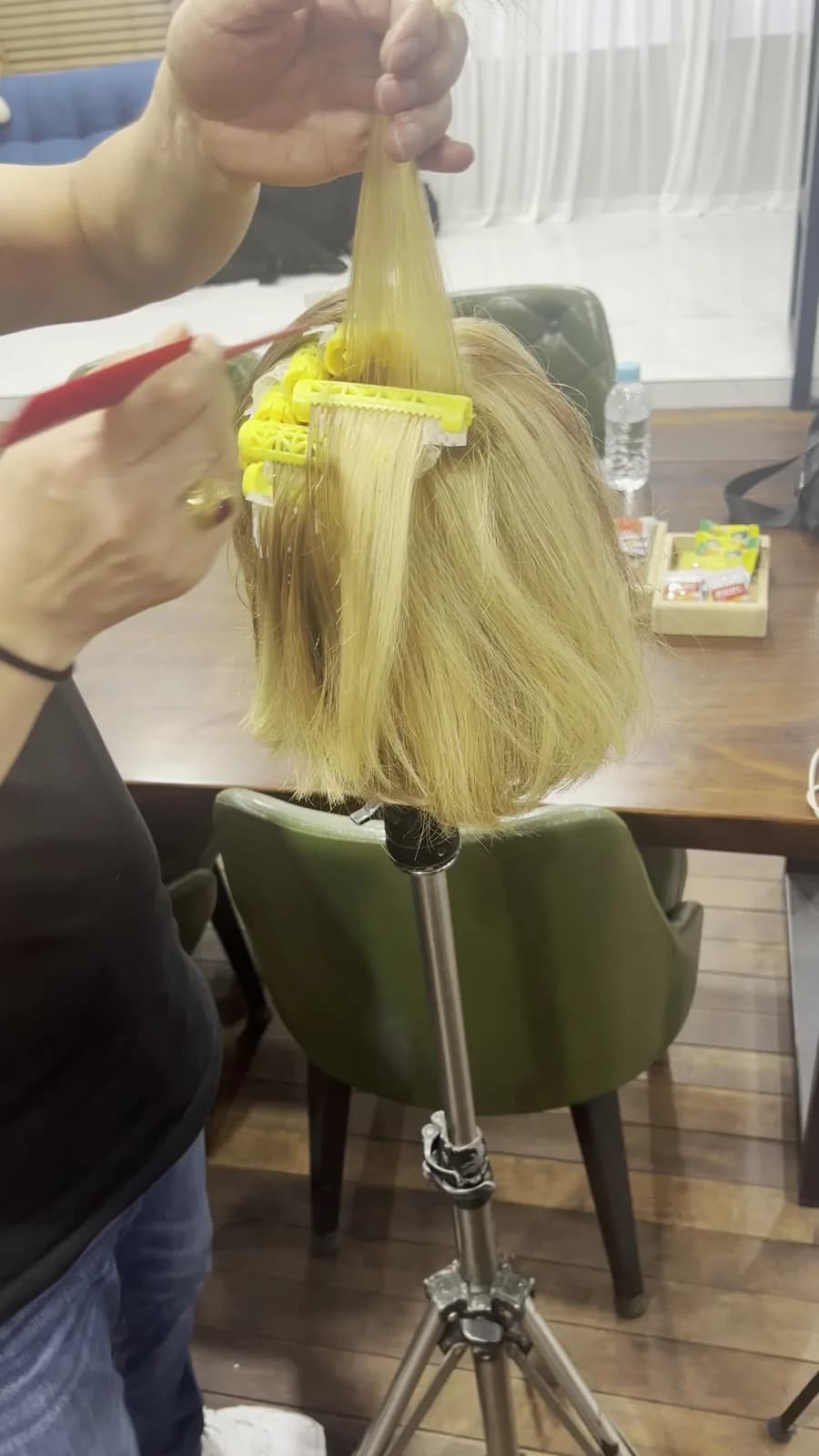
The grip. He worked on hands one movement at a time. Take the strand a little wider, wind it, hold it with both hands, then move it into one hand so the other is free for the paper. Hold with the left hand and keep the hair gathered so it does not split. In the volume perm, the middle finger is the main point that fixes the strand. "Hold, hold, hold" was the word I heard most that afternoon.
End paper. The strand is twisted twice, the paper slid onto the tip and pushed in with a tap of the tail comb. Two checks: the paper must not slide down the strand while you wind, and the tip of the hair must end up inside the paper, not sticking out.
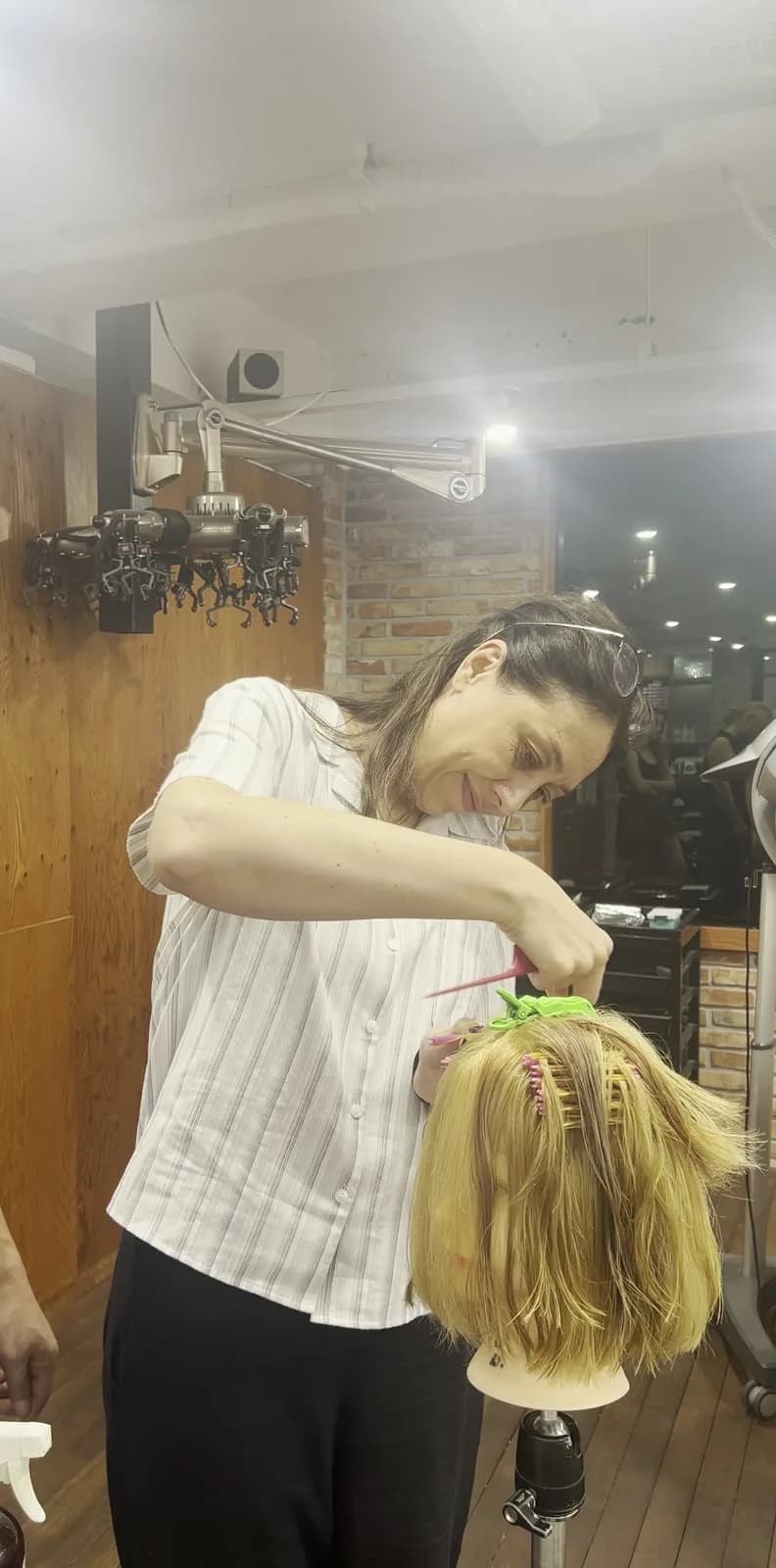
The tail comb. It stays in your hand the whole time, tail pointing down, and it never goes inside the strand. His comparison: a stylist putting the comb down is like a soldier dropping his weapon.
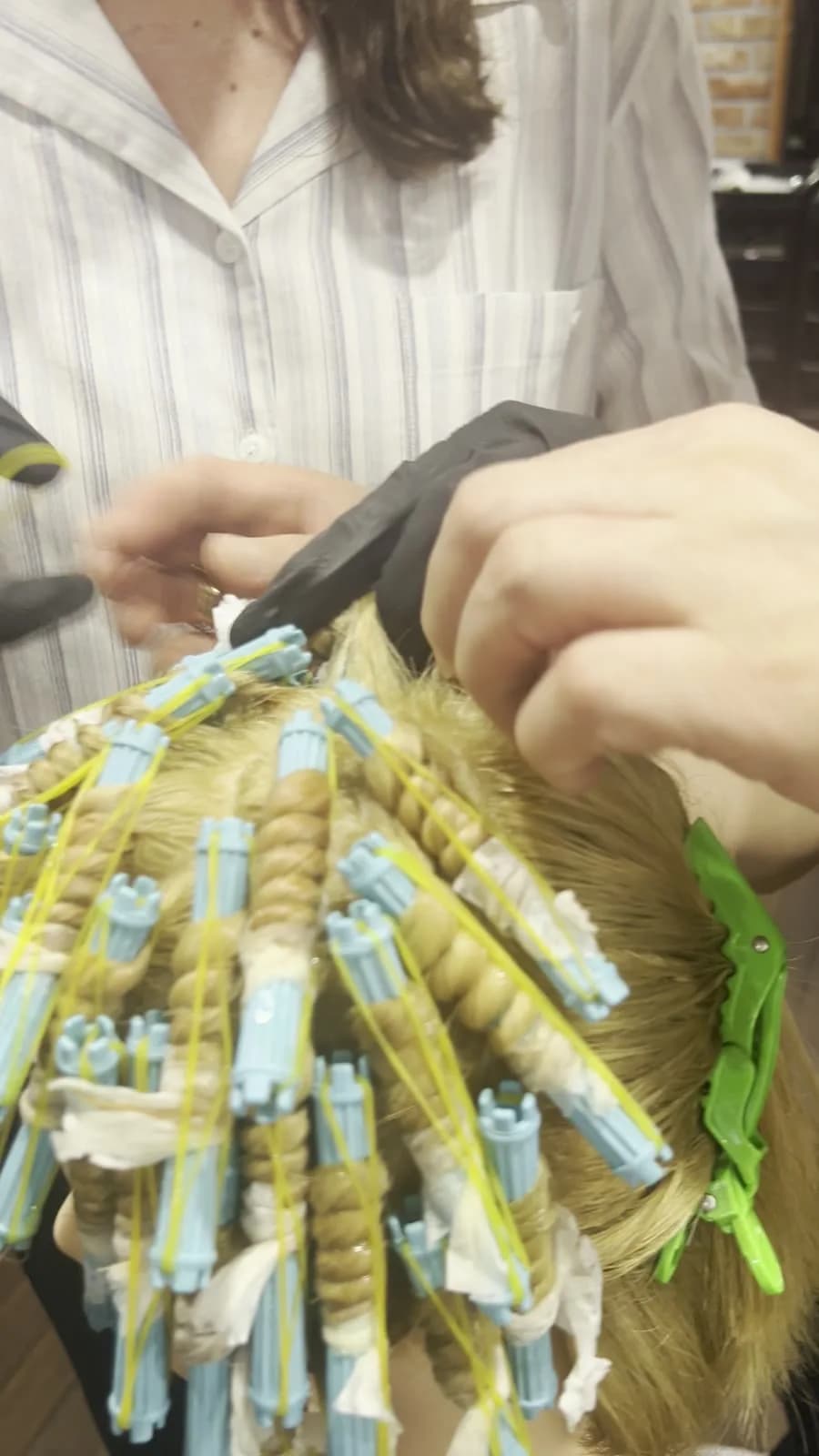
Tension. This was the centre of the volume perm demonstration. Pull both sides, firmly, all the way; a sharp pull is fine as long as it ends tight. Hook both sides of the fastener, or the tension is lost. Then the check: tap the wound rod with your fingers. If the tension is right, it answers with a tight, springy feel. He kept asking the model whether it hurt, and it did not, because he holds the strand at the base with his own hand so the pull goes into his fingers, not her roots.
Mistakes. He showed wrong results on purpose and called them what they are, a defect, then showed the right grip again and asked us to watch from the side: "this is actually hard."
When one of the students said it was difficult, he answered that it had been difficult for him too. Later he laughed: "What I do looked very easy, right?" As a trainee, he said, he was the fastest winder in the whole salon. That ease is practice, not simplicity.
I am not publishing the order of zones on the head or the details of the volume perm technique: that is the working protocol.
What I got
- Hands that hold a rod. The grip, the change of hands, the paper and the tension, done under his eye until each one was right. In March I could not do this; in August I could.
- The tap test. A simple check of tension with the fingers, no tools needed.
- The comb rule. Tail down, always in the hand, never inside the strand.
Who it suits and who it doesn't
It suits a stylist who can already section and wind but wants Korean precision in the grip and the tension. It does not suit someone looking for a shortcut: the lesson shows what correct looks like, and only practice makes it yours.
Verdict
9/10. The lesson that fixed my hands: in March I could not hold a rod properly, in August I could. One point off only because no lesson can do the practice for you.
Read next
Questions
What is croquignole winding?
The basic, straight winding of a strand on a rod. At the academy it was the starting point from which all other types were explained.
Why do Korean stylists wind on a diagonal?
That is how the academy teaches it: a strictly vertical winding is not used, the rod goes on a diagonal parting, called "diamond".
How do you check the tension on a rod?
Tap the wound rod with your fingers. A correctly tensioned strand feels tight and springy.
Does a tight winding hurt the client?
It should not. The stylist holds the strand at the base, so the pull goes into the stylist's fingers, not the client's roots. The teacher checked this with the model all the way through.
From the editor. In January 2027 I take up to 3 hairdressers to MASSTIGE HAIR Academy in Seoul for three days, with English interpreting and solutions included. Train in Seoul