Digital Perm Machine: How It Works and What the Stylist Sets
The unit, the wires, the heated rods and the screen: a look inside the machine a Korean digital perm is done on, and at where the machine stops and the stylist begins.
Oksana Prisyazhnaya, founder and editor. 16 October 2026
In short. A digital perm differs from a cold perm in one word: heat. It comes from a machine that heated rods are wired to. Below I show the Wave Master I trained on at MASSTIGE HAIR Academy in Seoul and work on myself: what it is made of, which numbers on the screen the stylist sets, and why the same machine gives two stylists a different curl.
What the machine is made of
A digital perm machine is three things.
The unit with the screen. A box on a wheeled stand, with the heater and the controller inside. On the screen the stylist sees temperature and time, and sees them separately by zone of the head: crown, nape, sides. The unit does nothing on its own: it holds the temperature it was given and counts the time.
The wires. Bundles of cable run from the unit, one to each rod. This is the part people notice: a client sitting with dozens of wires on her head is how a digital perm is recognised in photographs.
The rods. Heated rollers, which the profession calls rods. Inside each is a heating element, outside is the body the strand is wound on. Rods come in different diameters, and the diameter decides whether the result is a wide wave or a curl. I work on 22 mm rods. Two boxes of rods come with the machine, so there is nothing to buy separately at first.
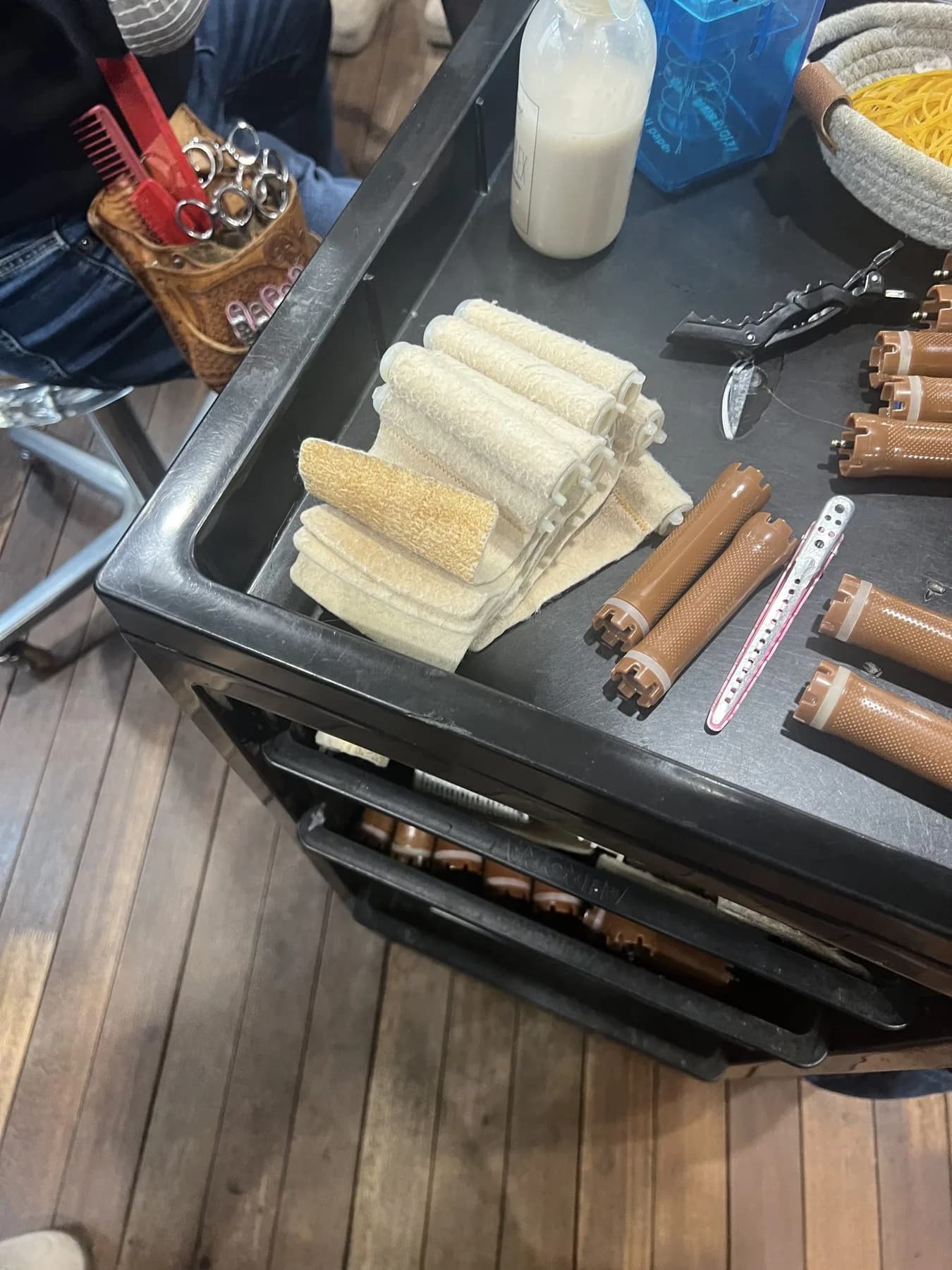
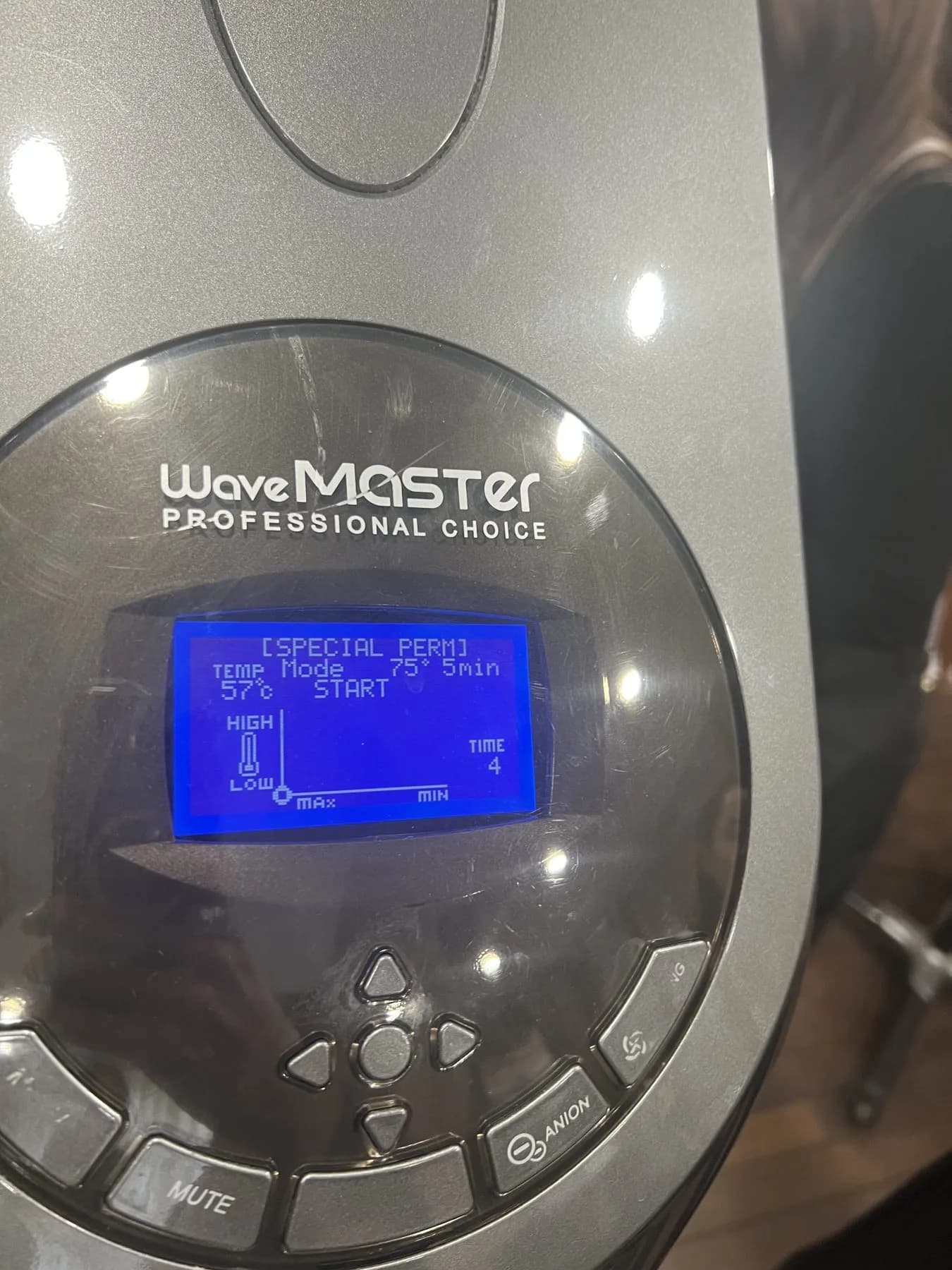
What the machine does by itself
One thing: it heats the rods to the set temperature and holds it for the set time. Everything else - the solution, the wrap, the hair diagnosis, the order of work across the zones, the moment to take the heat off - is the stylist's. This is why I dislike the word "digital" in the sense clients read it: as if the machine had worked everything out. The only digital part is the screen.
It matters when you compare stylists. The machine is much the same everywhere: several Korean makers produce it and it heats the same way. The difference between salons is in the hands and the solutions, not the machine.
What the stylist sets
Temperature. The working range on hair is 60-120 °C. The machine will go to 140, but on fine European hair I do not go above 120. The temperature is not set once for the whole procedure: it is changed as you go, by looking at the curl. One pass may run at 120, the next at 60. The machine holds one temperature for all the rods at once, so the stylist changes the setting for the whole head, not for a single strand.
Time. How long the rods stay hot. It is the second number on the screen and the second thing the stylist chooses for the hair in front of her rather than from a chart.
Rod diameter. Set before the wrap and fixed from then on. Large rods give a wave that stays smooth at the roots and starts moving from mid-length. Thin rods give a curl.
The solution. A digital perm needs its own solution, not the cold-perm one; it is made to work with heat. The neutraliser in the Korean solutions I use contains collagen and does not heat up in the reaction.
The test strand. One strand at the lower nape before the procedure starts. It shows how the hair takes the solution and what temperature it needs. On a digital perm I sometimes test twice.
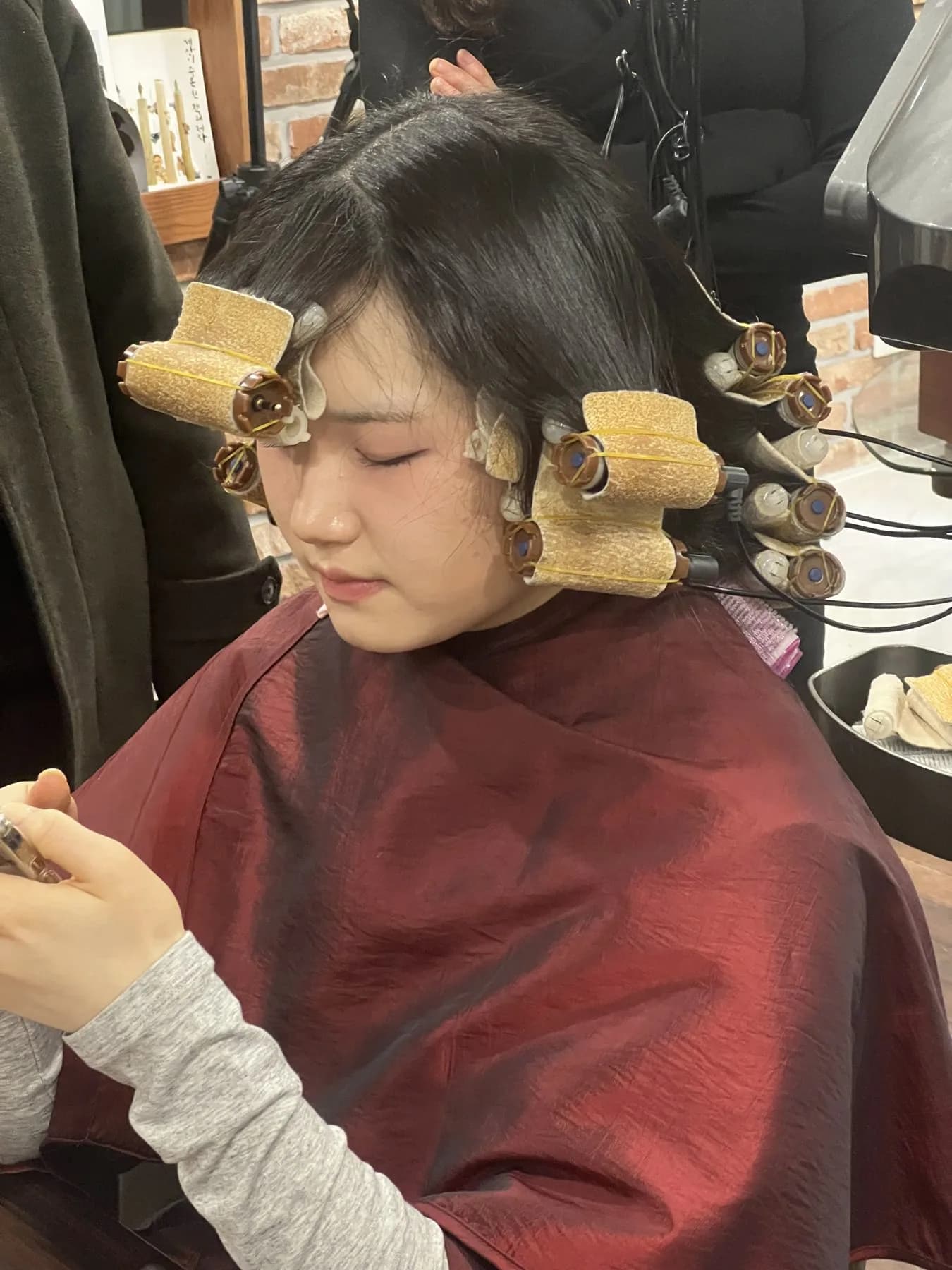
Why the result differs from a cold perm
Heat sets the shape so that the wave shows best on dry hair. A cold perm is the opposite: the curl is at its most defined wet and relaxes as it dries. This is the quality people come to a digital perm for: after washing and drying, a soft wave, smooth at the roots, movement from mid-length. If a defined curl is wanted, it is wound on top with a styler and lasts a few days.
The second difference is where the wave begins. The rods take the length; the roots stay straight. That is why a digital perm grows out unnoticed: there is no line between your own hair and the permed part.
What I noted at the academy
- In Korea the machine is worked with four hands. The stylist wraps, the assistant connects the wires and watches the screen. One person on all the rods is a Moscow reality, not a Korean one.
- The setting follows the curl, not the chart. At the seminar the temperature was changed several times in one procedure by looking at a strand. The maker's chart is a starting point, not an answer.
- The zone display is not decoration. Crown, nape and sides heat at different speeds, and Korean stylists watch them separately.
What the machine costs
The Wave Master is made in the Republic of Korea. On the Korean market it is listed at ₩2,300,000; on international sites at $2,995 before shipping and customs. Two boxes of rods are included. Shipping is priced separately and depends on weight and route.
Converted at the Bank of Russia rate for 16.10.2026
Prices checked on 16 October 2026 against the Korean seller's site and international catalogues.
Questions
Can a digital perm be done without the machine?
No. Without heat it is a cold perm: a different solution and a different curl shape. A flat iron or curling iron in place of rods is not a digital perm but a set on solution, and it holds differently.
Does the machine burn hair?
The machine holds the temperature the stylist set and no more. Hair is damaged by the wrong setting or the wrong solution, not by the machine itself. You can ask a stylist what temperature she runs on your hair: an answer of "always 120" should make you pause.
How many rods go on, and how long does it take?
It depends on length and density. On hair to the shoulders the procedure takes me 4-6 hours, on long hair 5-7, and most of that is not heating but preparing the hair, wrapping and neutralising.
From the editor. The Wave Master with rods can be ordered through silkybon.com, prices on the site as of 16.10.2026. I do perms on this machine in Moscow at the Versiya Lab studio. For stylists who want to see the machine at work: in January 2027 we go to Seoul for two days with Hong Jihoon, programme on versionacademy.com.